Panasonic low ESR capacitors – performance and stability in demanding applications
Panasonic low ESR capacitors – performance and stability in demanding applicationsDate of publication: 18-05-2026 🕒 3 min read
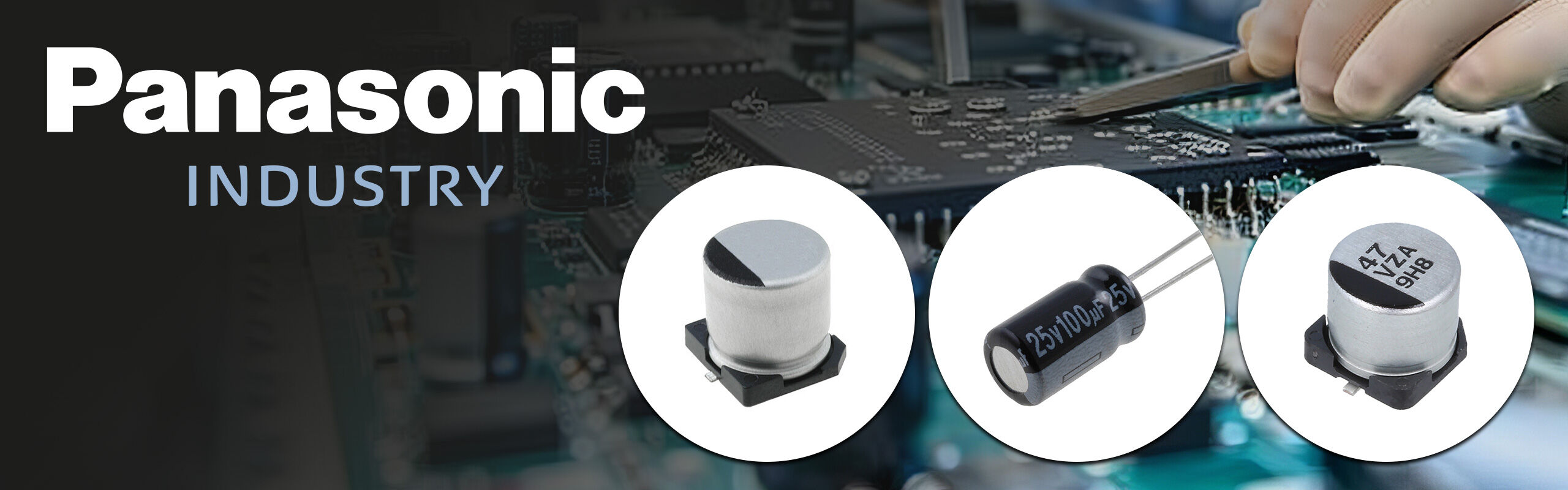
Modern electronic systems require components that not only meet basic parameters but also ensure stable operation over a longer period and under varying load conditions. In such applications, electrolytic capacitors Panasonic of the low ESR type, designed with the aim of minimizing losses and maximizing reliability, perform particularly well.
Their design allows for very low equivalent series resistance, which directly translates into improved energy efficiency and reduced heating of the component. As a result, they are eagerly used wherever voltage stability and resistance to intense exploitation are important.
Low ESR capacitors from Panasonic
What sets Panasonic low ESR capacitors apart
The most important feature of these components is the low ESR (Equivalent Series Resistance), which affects the capacitor's performance in dynamic power supply systems. Reducing energy losses means not only higher efficiency but also less risk of overheating and parameter degradation over time.
Panasonic capacitors have been optimized for use with large ripple currents and rapid load changes. As a result, they provide stable interference filtering and effective voltage smoothing, which is crucial in pulse circuits and modern power systems.
Durability and parameter stability over time
One of the significant advantages of Panasonic capacitors is their high longevity. The manufacturer uses advanced materials and technologies that maintain parameter stability even at elevated operating temperatures. Depending on the series, these components can operate for thousands of hours at temperatures up to 105°C, and in selected solutions, even up to 135°C.
This is particularly important in industrial applications and in devices with high packing density, where thermal conditions are much more demanding than in standard consumer electronics.
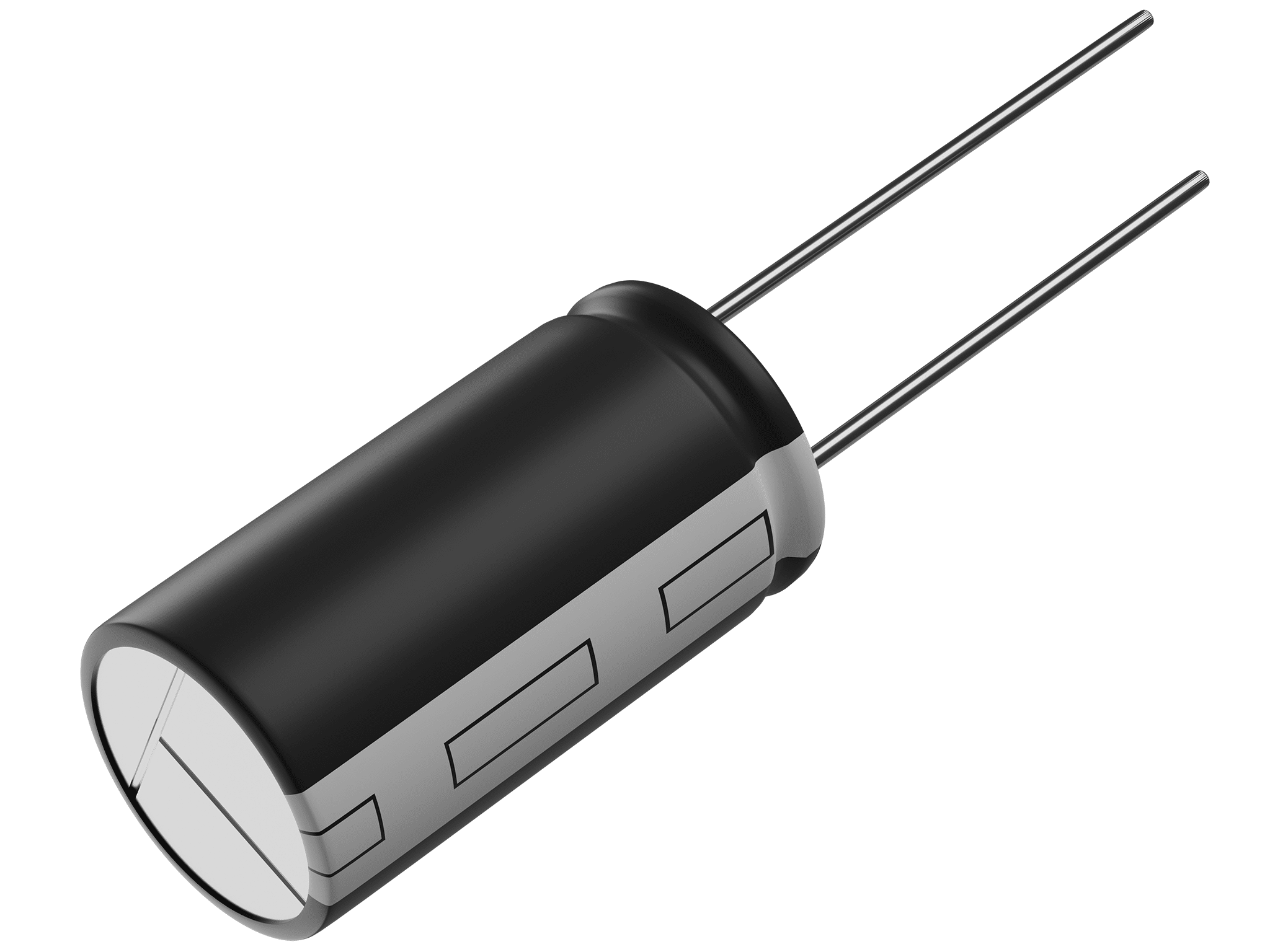 Some capacitors can operate in temperature ranges from -40...135°C.
Characteristics and available variants
The range of Panasonic low ESR capacitors includes a wide range of parameters, allowing their use in very different projects. Models are available with various rated voltages and capacities, as well as in different mounting formats, both through-hole and SMD.
A significant aspect is also the compact design while maintaining high performance, which facilitates the design of modern devices with limited space. As a result, these components find applications in both simple power supply circuits and more advanced electronic systems.
Practical applications
 Capacitors are also available in a THT version.
Panasonic low ESR capacitors are particularly valued in systems where rapid changes in current and voltage occur. They are most commonly found in switching power supplies and DC/DC converters, where they are responsible for voltage stabilization and ripple reduction.
They also perform well in industrial automation systems, LED lighting, and automotive electronics, where components must operate in variable and often challenging environmental conditions. Their properties are also appreciated in telecommunications equipment and IT devices, where reliability and continuous operation are crucial.
Panasonic technology – quality confirmed in practice
For years, Panasonic has been developing capacitor production technologies, focusing on increasing their durability and reducing energy losses. The result is components that meet stringent quality standards and are used in the most demanding industries, including industry and automotive.
Thanks to consistent technological development, users receive solutions that not only meet current market requirements but also ensure long-term stability of device operation.