How to choose a screwdriver? Overview of types, applications, and safe work principles
How to choose a screwdriver? Overview of types, applications, and safe work principlesDate of publication: 20-04-2026 🕒 15 min read
Screwdrivers are among the most basic and versatile tools, used by both professionals and hobbyists. They are used for screwing and unscrewing screws, making them applicable in electronics, mechanics, installation work, or DIY at home. We will look at how to choose the right screwdriver for a specific application, the most important types of tips, and how to care for the tool to ensure long and safe service.
Key information in brief:
- It is worth having a set of screwdrivers with different tips and sizes to match the tool to the type of screw and task.
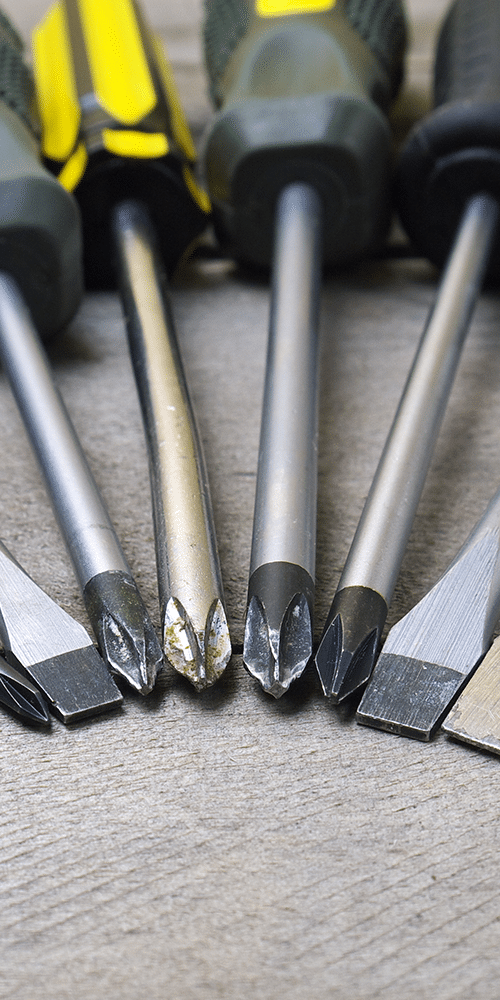
- The most commonly used screwdriver tips are flat, Phillips, Pozidriv, Torx, hex (Allen), and square (Robertson).
- Proper selection of the tip and its size prevents screw damage and improves work efficiency.
- Specialized screwdrivers – insulated, precision, impact, or antistatic – are essential for specific applications.
- Safe work requires holding the screwdriver perpendicular to the screw, applying even pressure, and avoiding tip slippage.
- Regular maintenance (cleaning, corrosion protection) and storage in a dry place prolong the tools' lifespan.
- The history of screwdriver development shows how their design was improved in response to industrial and mass assembly needs.
Screwdrivers in the TME catalog
Types of screwdrivers
Many variants of screwdrivers are available on the market, differing not only in tips but also in construction and operation. Choosing the appropriate model depends on the type of work, available space, and requirements for precision and torque. In this part of the article, we look at two main categories of tools – classic manual screwdrivers and increasingly popular electric and cordless models.
Manual screwdrivers
This is the most common and simplest type of screwdriver. It consists of a handle and a shaft ending with an appropriate tip matched to the screw head. Manual screwdrivers are useful in everyday applications such as furniture assembly, minor home repairs, or workshop tasks. Their versatility comes from great control over force and rotation direction, as well as a simple design that limits the risk of failure.
Electric and cordless screwdrivers
Unlike manual models, electric screwdrivers use a motor to drive tip rotation, significantly speeding up work. Battery-powered models additionally offer mobility, making them suitable for use in locations without electricity access. These tools excel in serial assembly or screwing many screws. However, despite offering speed and convenience, they may be less precise when working with delicate components, where torque sensitivity is crucial.
Specialized screwdrivers
Besides general-purpose tools, there is a wide range of screwdrivers designed for specific technical applications. They feature special properties or design elements that increase safety, precision, or comfort in unusual conditions.
- Precision screwdrivers
Designed for working with tiny screws found in watches, phones, laptops, or optical instruments. They have a thin shaft, small tip, and a rotating cap at the end of the handle to facilitate accurate manipulation. - Ratchet screwdrivers
Equipped with a ratcheting mechanism allowing screw rotation without releasing the grip. Especially helpful in hard-to-reach areas and repeated screwing or unscrewing. - Impact screwdrivers
Designed for loosening seized or corroded screws. They use hammer strikes converted into short rotational impulses. Their construction must be extremely durable to safely transfer large forces. - Insulated screwdrivers
Made for work near electrical installations. Insulation on the shaft and handle protects the user from electric shock. These tools must have VDE certification and meet EN 60900 standards, ensuring safety up to 1000V AC. - Antistatic screwdrivers (ESD)
Used in electronics service, where even minor electrostatic discharge can damage delicate integrated circuits. Made from materials that dissipate electrostatic charges, protecting both equipment and operator.Each of these variants finds application in specific technical fields; therefore, it is worth choosing the tool not only by tip but also by function and design.


Types of screwdriver tips
Choosing the right tip is crucial for effective and safe screwing or unscrewing. Even the best screwdriver will not fulfill its role if its tip does not fit the recess in the screw head.


The six most popular screwdriver tips
- Flat (slotted)
The simplest tip type, used for screws with a single straight slot. Although increasingly rare in new designs, it is still essential for electrical installations or maintenance work. - Phillips (PH)
A characteristic cross-shaped tip, providing good centering and comfortable use. Common in RTV, household appliances, and furniture. Its drawback is the tendency of the tip to cam out under higher torque. - Pozidriv (PZ)
Resembles the Phillips tip but has additional small slots, increasing contact points and improving force transmission. Commonly used in European products. Allows working with higher torque without slipping risk. - Torx (T, star-shaped)
A six-point star-shaped tip. Provides a large contact surface and excellent force transmission, minimizing screw head damage risk. Very common in electronics, automotive, and precision mechanics. - Hexagonal (Hex/Allen)
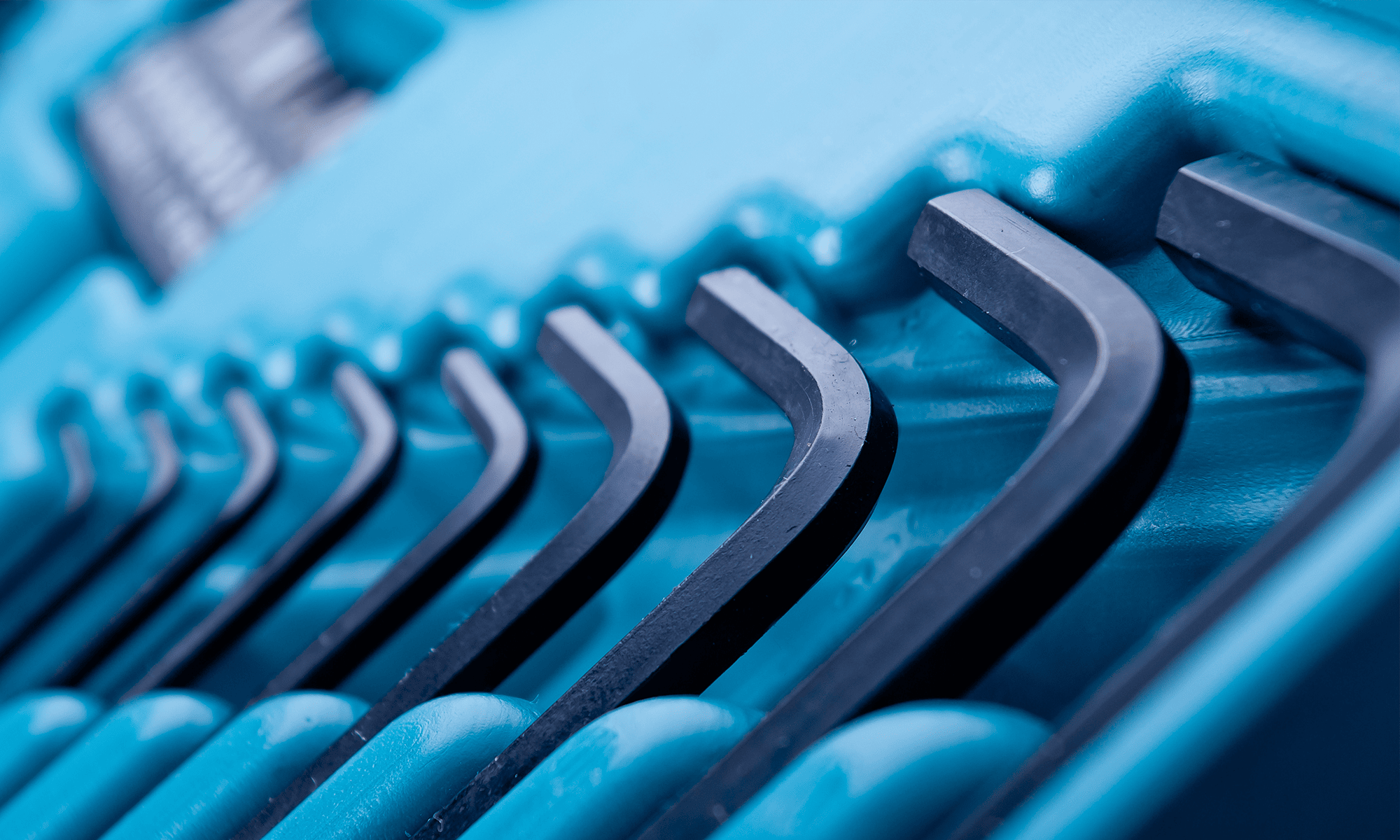
A hex-shaped tip for socket screws. Common in furniture, bikes, and mechanical devices. Allows efficient torque transmission but requires accurate size matching. - Square (Robertson)
Characterized by a square tip shape. Grips the socket well, reducing the risk of tip slipping during work. Especially valued in Canada and construction for reliability and assembly speed.


Less common and special screwdriver tips
Besides standard tips, there are many less common profiles designed for specific industrial, service, or security applications. Though rarer in home workshops, they can be essential when working with electronic devices, household appliances, or security systems. It’s good to know them, especially if working with products requiring restricted access.
- Tri-Wing, Spanner, Torq-Set
The Tri-Wing tip looks like a three-bladed propeller and is used in aerospace equipment and some gaming consoles. Spanner has two pins for screws with two opposite slots. Torq-Set has oblique arms and is used in military and aerospace applications. These profiles require special bits and limit access to unauthorized persons. - Tamper-proof tips
Used in devices not meant to be opened by end users. Their design may include internal pins, unusual shapes, or asymmetric slots preventing use of standard screwdrivers. Found in RTV devices, vending machines, or public installations. - Security tips preventing self-loosening
Some types, like Torx TR (tamper-resistant), have an additional pin inside the socket, preventing insertion of a classic Torx tip. Their design restricts the use of standard tools and makes disassembly by unauthorized persons difficult, important in automotive, transport devices, or industrial installations.Though these screwdriver types are uncommon in home sets, knowing them can be useful for service work or disassembly of special devices.


Screwdriver construction
Though a screwdriver seems simple, its construction greatly impacts comfort and work efficiency. Each component – from handle to tip – serves a specific function and can be optimized for particular uses.
Handle
The handle is responsible for user comfort and effective force transfer. Its shape should fit well in the hand, providing a secure grip even in wet or oily conditions. Plastics with varying hardness are often used – hard zones ensure control during fast movements, and soft areas allow precise high-torque screwing. Anti-slip surfaces and flattened areas preventing tool rolling on the table are important details.
Shaft (rod)
The shaft, the part connecting the handle to the working tip, must be made of durable and resistant material. Chrome-vanadium steel, molybdenum steel, or S2 alloy are commonly used, known for high hardness and deformation resistance. Heavier-duty models may have an additional hex profile near the handle to aid tightening with a wrench.
Tip (bit)
This part directly contacts the screw, so its quality determines work precision. Tips can be integrated into the shaft or interchangeable – in bit-holder screwdrivers. High-quality tips are precisely ground and hardened for durability and wear resistance. Additional coatings like phosphate or oxidized layers increase screw grip and reduce slippage risk during work.


How to choose the right screwdriver?
Choosing a screwdriver is not only about convenience but primarily about effectiveness and safety at work. Even the best tool will fail if not properly matched to the screw type, size, and nature of tasks. What to consider?
Matching screwdriver to screw type
Each tip type is designed for a specific shape of the screw head recess. Using the wrong profile can cause head damage, disassembly difficulties, or even screwdriver tip destruction. For example, the Phillips tip works well in electronics and household appliances due to its self-centering geometry. Torx is used in mechanics and industry where high torque and slip resistance matter. European technical devices often feature Pozidriv screws that transmit force better than classic Phillips.
Choosing the right tip size
As important as the type is the proper size matching. Manufacturers use standard markings like PH0 to PH3 for Phillips or T10 to T30 for Torx®. Selecting too small a tip risks slipping out and damaging the screw head. Too large a tip simply won't fit the socket. Precise size matching increases efficiency and reduces injury risk from uncontrolled tool slipping. The TME catalog allows filtering screwdrivers by dozens of parameters, including tip types and sizes.
Considering material and work type
The kind of task and materials should also influence screwdriver choice. For precise jobs like electronic assembly, tools with small tips and slim handles are favorable. For wooden or metal structure assembly, models with thicker shafts and ergonomic grips offer a steadier hold. For seized or corroded screws, an impact screwdriver may be necessary. Electrical installation tasks require insulated tools compliant with VDE standards to protect against shock.

Safe and efficient use of a screwdriver
Even the best screwdriver won't guarantee success if used improperly. Correct technique and ergonomic care translate not only into speed and precision but also user safety and the durability of screws and tools.
To avoid slips and damage, the screwdriver tip should be set exactly perpendicular to the screw head. Turning at an angle destroys the recess and increases uncontrolled tip popping out risk. Also important is applying constant, even axial pressure and smooth rotation. Excessive force, especially with delicate connections, should be avoided – controlled work with a properly chosen tool yields better results.
A well-chosen screwdriver should fit firmly in the hand and allow easy operation for extended periods without fatigue. Handle shape, surface, and balance play a huge role, especially during intensive workshop work.
Maintenance and storage of screwdrivers
Proper care can significantly extend tool life and maintain full functionality for years. Screwdrivers are not the most demanding tools in maintenance but following practical care rules in daily use is advisable.
Cleaning and inspection
After finishing work, it’s good to wipe the screwdriver of grease, dust, or metal residues. A soft cloth suffices; for greasy dirt, a mild degreaser may be used. Regularly check the tip’s condition – look for wear, deformations, or chipping signs. Also, check for looseness between shaft and handle and whether the handle material shows cracks or degradation.
Specific maintenance for different materials
Steel parts of screwdrivers are prone to oxidation, especially in humid workshop environments. To prevent this, store tools in dry places, preferably in closed boxes or hanging away from moisture sources. It’s also good practice to occasionally protect metal parts with a thin layer of technical oil, creating a rust barrier.
Screwdrivers with wooden handles, now less common, require special care. To prevent cracking and drying out, occasionally apply a small amount of linseed oil or special wood care preparation.
History and development of screwdrivers
Though it’s hard to imagine a workshop today without a screwdriver set, its history goes back several centuries. Over the ages, screwdrivers underwent many changes – from simple hand-forged forms to advanced precision and industrial tools. The screwdriver evolution is closely linked to screw development as fastening elements and technological progress in machine and device production.
Beginnings and Industrial Revolution
The first mentions of tools resembling today's screwdrivers date to the 15th century and refer to simple single-slot screw tools. For centuries, screws and their tools were rare, expensive, and time-consuming to produce. The breakthrough came with the Industrial Revolution, when screws began to be mass-produced and standardized in shape. This also enabled the development of specialized screwdriver tips.
Key figures in this tool's history include Peter Robertson – inventor of the square tip, which greatly improved stability and torque transmission. In the 1930s, Henry Phillips developed the cross tip, quickly gaining popularity in the US automotive and machinery industries. Both solutions influenced assembly speed and connection reliability, becoming milestones in hand tool history.
Standardization and regional differences
Over time, development of screwdrivers and screws led to the need for standardization. In North America, the dominant system became Phillips, characterized by simple and self-centering geometry. In Europe, the Pozidriv system gained more approval, based on a similar cross layout but optimized for higher torque transmission and slip reduction.
Today, tip types and tool dimensions are regulated by international technical standards such as DIN (Deutsches Institut für Normung), ISO (International Organization for Standardization), and ANSI (American National Standards Institute). Thanks to them, users worldwide can utilize interchangeable tips and tools matching the same screw standards. Standardization also boosted the production of bits, power tools, and automated assembly systems.
Summary
The screwdriver is an unassuming but absolutely essential tool – both in home workshops and professional technical environments. The variety of tips, sizes, and designs means one universal model is not enough for all tasks. Therefore, it’s worth equipping yourself with a well-chosen set of screwdrivers that allows working in diverse conditions and with various screw types.
Screwdriver sets in the TME catalog
FAQ – frequently asked questions about screwdrivers
What is the difference between a Torx® and a Torx Plus® tip?
A Torx® tip has the classic six-point star shape with sharp angles, whereas Torx Plus® has a more rounded arm profile, which allows for a larger contact surface with the screw recess. As a result, Torx Plus® can transmit higher torque and reduces the risk of slipping, especially in industrial applications.
Can screwdrivers with magnetic tips damage electronics?
In most cases, magnetic screwdrivers do not pose a risk to modern electronics, including computers. Flash memory, SSDs, and integrated circuits are resistant to weak magnetic fields. Caution is only advisable near traditional HDDs, but even there the risk of damage from brief contact with the magnet in a screwdriver is minimal.
How should precision screwdrivers be used?
Precision screwdrivers should be used in a controlled and gentle manner. They are held differently from standard ones—turned with the fingers while the rotating cap at the end of the handle rests against the palm. Pressure should be even, and the tip should fit the small screw properly to avoid damage. These tools are ideal for working with electronics, watches, and other delicate mechanisms.
Why do screwdrivers have black tips?
Black screwdriver tips are usually the result of phosphating or oxidizing, which are chemical processes that improve corrosion resistance and increase the grip of the tip on the screw. This helps reduce the risk of cam-out, and the bit adheres better to the screw recess. The black finish may also indicate additional surface hardening, which improves durability.
What types of screwdriver handles are there?
Screwdriver handles vary in shape, material, and intended use. The most common types are:
- Cylindrical – universal and easy to turn with the fingers
- Shaped (ergonomic) – adapted to the hand for better grip and control
- Ratcheting – with a ratchet mechanism for faster work
- Rotating (for precision screwdrivers) – with a cap resting against the palm, allowing precise maneuvering
- Insulated (VDE) – made of materials that protect against voltages up to 1000V AC
- Non-slip – coated with soft rubber or TPR for better grip even with wet hands
What metal works best for screwdrivers?
The best metal for screwdrivers is alloy steel, especially:
- Chrome-vanadium steel (Cr-V) – durable and resistant to corrosion and wear
- S2 steel – very hard and resilient, often used in bits and industrial tools
- Chrome-molybdenum steel (Cr-Mo) – resistant to twisting and suitable for impact work
High-quality steel is heat-treated and often coated (for example by phosphating), which increases its durability and grip on the screw.
Can a flat-head screwdriver be used for prying?
Yes, a flat-head screwdriver can be used for prying, but only occasionally and with moderation. It is not designed for that purpose, so it can easily bend or break, especially if the shaft is thin. For prying, it is better to use dedicated tools such as a pry bar, wood chisel, or service pry tool—they are safer and more durable.
Transfer Multisort Elektronik (TME) is one of the world’s largest global distributors of electronic components, electrotechnical parts, workshop equipment, and industrial automation. The catalog includes over 1,300,000 products from 1,300 leading manufacturers. TME’s modern logistics centers in Łódź and Rzgów (Poland), with a combined area of over 40,000 m², ship nearly 6,000 packages daily to customers in more than 150 countries.
TME also invests in the development of knowledge and skills of young engineers and electronics enthusiasts through the TME Education project, and supports the tech community by organizing the TechMasterEvent series, promoting innovation and experience exchange.