SMT surface mount: technology and practicalities
SMT surface mount: technology and practicalitiesDate of publication: 17-11-2025 🕒 7 min read
In today's world of electronics, surface mount technology (SMT) plays a fundamental role. SMT is a technology, which involves direct assembly of electronic components on the surface of a printed circuit board, which has significantly revolutionized the way modern devices are designed and manufactured. Unlike traditional through-hole assembly (THT), where components were attached through holes in the board, SMT allows the creation of more compact and efficient devices. This change has enabled significant miniaturization of electronic equipment, while increasing its functionality and performance. In this article we will take a closer look at SMT technology, we will discuss the key stages of this process, as well as practical aspects and prospects for further development.
- Basic elements of SMT
- Detailed manufacturing process
- Practical aspects of SMT assembly
- Design for manufacturing - DFM
- Challenges and limitations
- Rework
- The future of SMT technology
- Challenges for the technology
- Summary
Basic SMT Components
Surface mount components (SMD) are smaller and lighter than traditional components, which enables miniaturization of electronic devices. They differ in the types of enclosures, such as chip, SOIC, QFP and BGA, tailored for Others functions and applications. SMDs are packaged in tapes or trays, which facilitates automatic assembly. At TME you will find a wide selection of integrated circuits, sMD resistors i sMD capacitors, which are crucial in SMT assembly.
Printed circuit boards (PCBs) for SMT: PCBs for SMT must have the right material properties, such as thermal and dielectric strength. The design of the solder fields (pads) is crucial for precision soldering of components. The solder mask protects the tracks and prevents unwanted solder joints. At TME you will find materials for the manufacture of printed circuit boards and pCB varnishes, that will help you protect and maintain your projects.
Detailed SMT manufacturing process
Preparation of PCBs and components:
Drying PCBs and components removes moisture, that could interfere with the soldering process. Verification of components before assembly avoids the use of defective components.
Solder paste application:
Screen printing with SMT stencils precisely applies solder paste to PCBs. Paste dispensing is an alternative method, used for prototypes and small batches. Paste application inspection (SPI) ensures the right amount and quality of paste.
Automatic component placement:
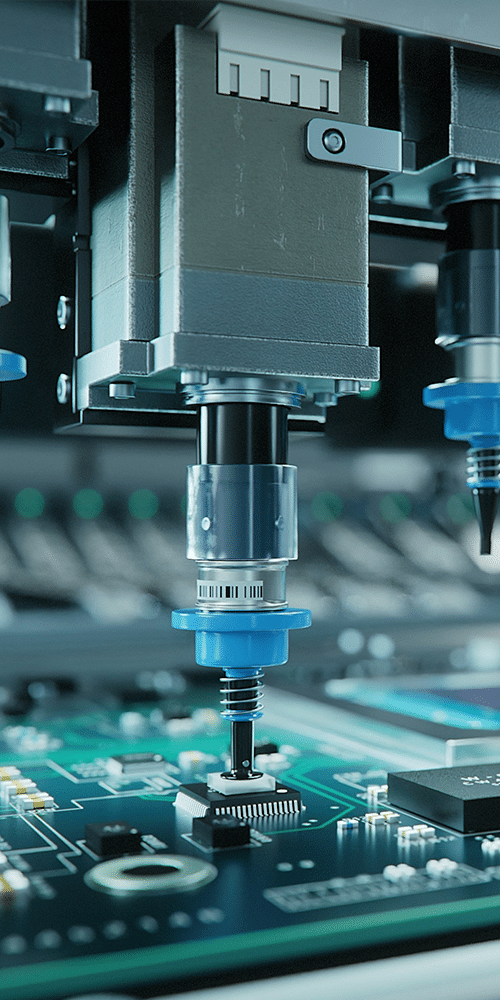
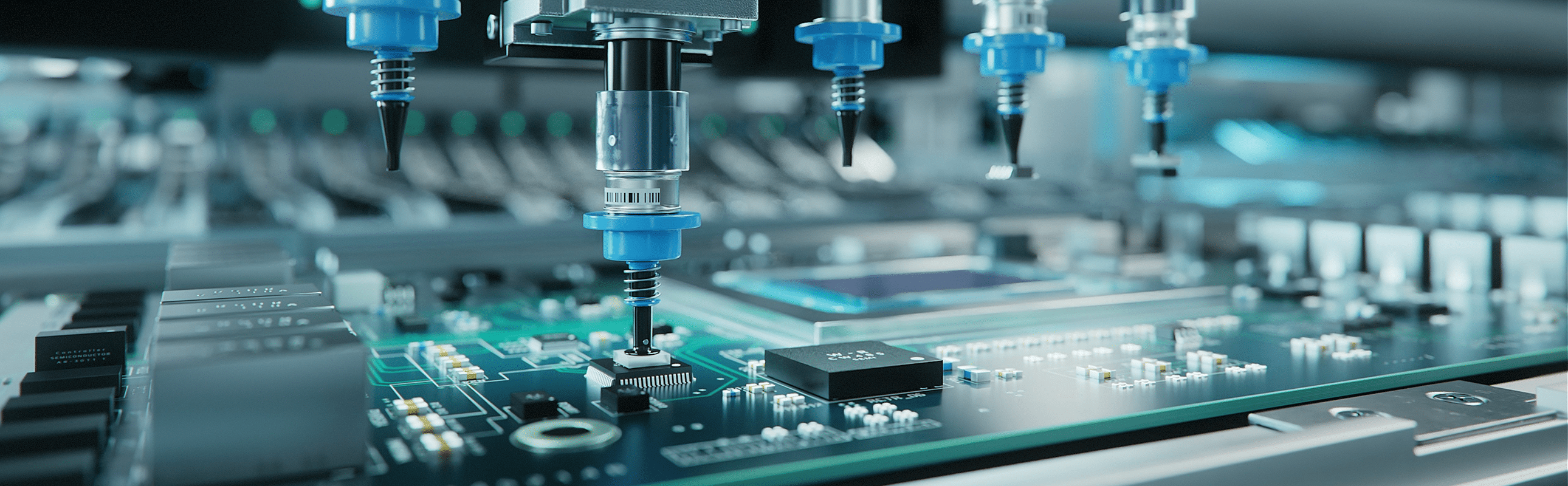
Pick & Place machines pick and place components on PCBs with high precision. Vision systems on these machines enable component position correction.
Reflow Soldering:
Reflow soldering melts the solder paste, creating permanent connections. Reflow ovens, e.g. convection, control the temperature profile, crucial to joint quality.
Alternative soldering techniques:
Selective soldering enables the soldering of selected components, that require special conditions.
Cleaning (washing) of boards after assembly: Cleaning removes fluxes residues and contaminants, that can adversely affect reliability. The cleaning methods used depend on the type of flux used.
Post-assembly inspection and checking: Inspection and control, e.g. AOI and AXI, ensure high quality and reliability of products.
Components can be mounted on one side of the PCB (single-sided mounting) or on both sides (double-sided mounting). Some components also require mixed technology, so combining SMT and THT techniques.
The whole process can be largely automated, which has a positive effect on efficiency, repeatability and quality. However, this requires the inclusion of a large number of specialized machines: the SMT line includes paste printers, automatic assembly machines, reflow ovens, conveying systems and inspection equipment.
Practical aspects of SMT assembly
Surface mount technology (SMT) offers a number of advantages, but it also comes with challenges and specific requirements. Understanding these aspects is key to the effective use of SMT in electronic manufacturing. SMT has revolutionized the electronics industry, offering a number of significant advantages over traditional assembly methods.
Miniaturization and weight reduction of devices is one of the key benefits of SMT. Surface mount assembly allows the use of smaller components and denser packing of components on the board, which directly translates into reduced size and weight of finished devices.
High component packing density allows more components to be placed on the same area of the printed circuit board. This, in turn, makes it possible to create more complex and functional devices while maintaining compact dimensions.
Better electrical performance result from shorter connection paths between components. This reduces parasitic inductances and capacitances, which improves the stability and performance of electronic circuits, especially for high-frequency signals.
High productivity and the ability to fully automate production are other significant advantages of SMT. The surface mount process is optimized for automation, which allows for fast and precise high-volume production.
Cost efficiency in high-volume production results from automation and increased productivity. Despite the high initial costs associated with purchasing machinery, SMT allows lower per-unit costs for high-volume production.
Design for manufacturing (DFM -design for manufacturing)
Design for manufacturing (DFM) is a set of principles and guidelines, that aim to optimize PCB design for efficient and reliable production.
Design principles for solder pads and paste holes are key to ensuring proper connection of components to the PCB. Proper shape and size of pads and precise placement of solder paste holes minimize the risk of solder defects.
Optimal placement of components on the PCB is designed to avoid problems during assembly, soldering and inspection. The following should be taken into account.in. spacing between components, component orientation and ease of access to test points.
Thermal issues in the design are extremely important, especially for high-power devices. Ensure adequate heat dissipation from components, using.in. heatsinks, vents and proper component placement.
The importance of DFM for performance, quality and production costs cannot be overstated. Good DFM practices reduce production time, reducing the number of defects, improved reliability and reduced manufacturing costs.
Challenges, constraints and common errors
Despite its many advantages, sMT technology also comes with some challenges and limitations.
The complexity of the process and high precision requirements are key to ensuring high assembly quality. The SMT process requires precise component placement, control of soldering parameters and quality monitoring at every stage.
Sensitivity of components to external factors, such as temperature, moisture and electrostatic discharge (ESD), requires special care during transportation, storage and assembly.
Difficulties in handling and identifying miniature components result from their small size. This requires the use of specialized Tools and techniques, as well as proper training of personnel.
Typical assembly disadvantages include:
Solder bridges, that is, unwanted solder joints between adjacent pads is a common problem.
The tombstone effect (tombstoning) is the detachment of one end of a component from a pad during soldering.
Insufficient solder is a problem that is the opposite of the aforementioned solder bridges. While in their case undesirable connections are formed, while if too little solder is used, the connections can be unstable.
Cold solders are solder joints of poor quality, visually may look correct, but do not provide conductivity. Cold solders are the result of a mismatch between the temperature and the materials used.
Voids are air bubbles trapped in the solder joint, weakening its strength. They affect the quality and durability of the connections.
Component misalignments, that is, misplacement of components on the pads.
The causes of these defects can vary, from errors in PCB design, through incorrect parameters of the soldering process, to contamination and mechanical damage. Effective prevention requires careful planning of, process control and quality monitoring.

Repairability (Rework)
Repairability (rework) is an integral part of the SMT process, allowing defects to be removed and damaged boards to be restored to serviceability. Due to the difficulty of accessing solder connectors and the need for precise temperature control, this is not easy and requires the use of m.in. hot-air stations, bGA removal and positioning systems and inspection microscopes.
The impact of repairs on the reliability of connections is an important issue. Every repair involves the risk of component or PCB damage, that's why it's important to follow proven procedures and ensure high quality workmanship. Therefore, it is worth taking care of proper quality management during the entire SMT process, to reduce the number of defects, which can have a negative impact on efficiency.
Key quality indicators allow to monitor the effectiveness of the SMT process. We can indicate here.in.:
- FPY (First Pass Yield): percentage of wafers, that have passed through the assembly process without any defects.
- DPMO (Defects Per Million Opportunities): number of defects per million potential defect opportunities.
Control methods used in SMT include activities such as:
- Visual (manual) inspection, i.e., evaluation of the quality of solder joints by the operator.
- Automatic Optical Inspection (AOI), i.e. automatic inspection of wafers using vision systems.
- Automatic X-ray Inspection (AXI), is an inspection of the internal structure of solder joints, especially useful for BGA inspection.
- Electrical testing (ICT, functional tests), i.e., checking the correct operation of electronic circuits.
The future of SMT technology and challenges
Surface mount technology (SMT) is constantly evolving, to meet the growing demands of the electronics industry. This development brings both new opportunities, as well as challenges, that manufacturers must face.
Key development trends are:The increasing miniaturization of components is one of the major trends in SMT. Manufacturers are aiming to reduce component sizes to levels of 01005, 008004 and smaller, allowing further increases in packing density and device miniaturization.
Advanced automation, robotization and integration with the Industry concept 4.0 are playing an increasingly important role in SMT processes. The use of artificial intelligence (AI), big Data analytics and machine-to-machine (M2M) communications are enabling production optimization and efficiency improvements.
Adapting to the requirements of 5G and Internet of Things (IoT) technologies poses new challenges for SMT. These devices require high performance, reliability and miniaturization, which is driving further development of surface mount technology.
The development of 3D assembly technologies and heterogeneous integration opens up new opportunities in electronics design and manufacturing. 3D assembly allows components to be stacked together, and heterogeneous integration to combine different technologies in a single device.
New soldering materials (e.g. low-temperature, lead-free with improved reliability) and processes are being developed to improve the quality and reliability of solder joints, as well as to reduce environmental impact.
The growing importance of sustainability and "green" electronics is an important trend in the SMT industry. Manufacturers are striving to minimize their environmental impact by using green materials, reducing energy consumption and optimizing production processes.
Upcoming challenges
Managing complexity and integrating new technologies pose significant challenges for SMT manufacturers. Introducing increasingly advanced processes and materials requires high investment in R&D and personnel training.
Meeting increasingly stringent environmental and quality standards is key to ensuring competitiveness in the marketplace. Manufacturers must adapt their processes to meet regulatory requirements and customer expectations for environmental protection and product quality.
Flexibility and resilience of the supply chain are becoming increasingly important in the context of global challenges. Ensuring continuity of supply of components and materials is key to maintaining manufacturing stability.
Ensuring reliability with extreme miniaturization is a major technical challenge. As component sizes shrink, the risk of defects and reliability issues increases.
Summary
SMT technology is characterized by its versatility and adaptability to changing market needs. Its key features include miniaturization, automation and high efficiency, which makes it the dominant technology in electronics manufacturing. SMT has a huge impact on technological development, enabling the creation of increasingly advanced and functional devices. The dynamic development and future of surface mount assembly look promising, although they also involve overcoming a number of challenges. At TME you will find everything, you need for SMT, from solders to soldering stations.
Transfer Multisort Elektronik (TME) is one of the world’s largest global distributors of electronic components, electrotechnical parts, workshop equipment, and industrial automation. The catalog includes over 1,300,000 products from 1,300 leading manufacturers. TME’s modern logistics centers in Łódź and Rzgów (Poland), with a combined area of over 40,000 m², ship nearly 6,000 packages daily to customers in more than 150 countries.
TME also invests in the development of knowledge and skills of young engineers and electronics enthusiasts through the TME Education project, and supports the tech community by organizing the TechMasterEvent series, promoting innovation and experience exchange.