Wattmeters, power consumption meters - how to choose?
Wattmeters, power consumption meters - how to choose?Date of publication: 24-02-2025 🕒 4 min read
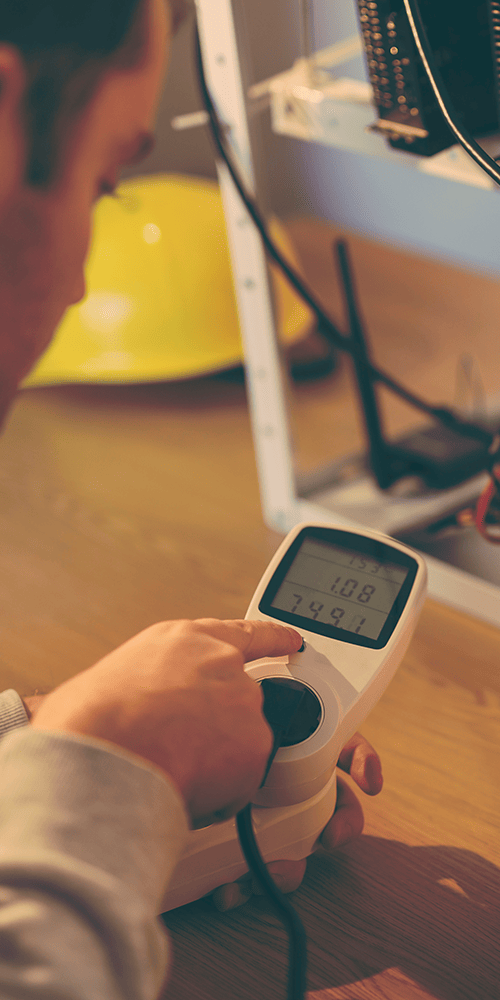
The wattmeter is a measuring instrument used to measure active power in electrical circuits. Wattmeters can be analog or digital and are used both in laboratory measurements and in everyday use, for example, to monitor electricity consumption in household appliances.
How a wattmeter works
Wattmeters operate based on measuring the voltage and current flowing through a circuit and then calculating the active power. In this way, they indicate electricity consumption, which is the amount of power consumed over a specific time by a device or electrical circuit.
What is active power?
When describing active power, it is hard not to mention the so-called power triangle. This is a concept known to every electrician but quite enigmatic for a layperson. Although due to electricity charges, everyone deals with active, reactive, and apparent power, understanding these terms can be challenging. Meanwhile, it is enough to remember that power is a quantity described by three different quantities that are interrelated. These are:
- active power, which we intuitively understand as the useful power of a device, expressed in watts or kilowatts (kW),
- reactive power, expressed in kilovars (kVar),
- apparent power, expressed in kilovolt-amperes (kVA).
The mentioned mutual relationship of these quantities is expressed by the so-called power triangle:
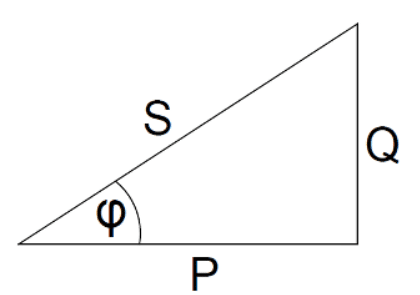
Where:
S – apparent power
Q – reactive power
P – active power
Φ – phase shift
When describing the operation and application of wattmeters, neither reactive nor apparent power is important to us. Wattmeters measure active power, which is useful, converted into electrical energy, and thus the power delivered to receivers over time.
How does an analog wattmeter work?
The construction of an analog wattmeter and its principle of operation are simple. An analog energy consumption meter operates based on the interaction of two coils: current and voltage. The current coil is stationary and connected in series to the circuit through which the measured current flows. The voltage coil is movable and connected parallel to the load. The interaction between the magnetic fields of both coils generates a torque proportional to the active power.
When current flows through the current coil and voltage is applied to the voltage coil, magnetic fields are generated. The interaction of these fields causes the bending of the bimetallic element in the voltage coil, which moves the pointer on the wattmeter scale. The pointer shows the value of active power, i.e., the energy consumed by devices in the given circuit.
How does a digital wattmeter work?
A digital wattmeter operates by converting electrical signals into digital data, which is analyzed by a microprocessor. The device consists of current and voltage sensors, analog-to-digital converters (ADC), a microprocessor, and a display. The sensors measure current and voltage in the circuit, and the ADC converters transform these signals into digital data. The microprocessor analyzes this data, performing active power calculations. Measurement results are presented on a digital display, showing power values in real-time.
Types of wattmeters
Energy consumption meters can be divided into several categories depending on their purpose:
- single-phase wattmeters – used to measure power in single-phase electrical circuits, typical for domestic installations and small businesses. These devices measure current and voltage in one circuit, allowing for monitoring energy consumption by specific devices or the entire household (if powered single-phase),
- three-phase wattmeters – designed to measure power in three-phase power systems, often found in industry and large electrical installations. These wattmeters are more advanced because they measure current and voltage in three separate phases, enabling accurate monitoring of energy consumption in complex power systems,
- laboratory wattmeters – high-precision devices used in scientific research and technical tests. They are characterized by very low measurement error and high accuracy, which is important in laboratories and when testing new technologies, as well as during technical measurements. They can measure different types of power, including active, reactive, and apparent power,
- wattmeters for home use – easy-to-use devices designed to monitor electricity consumption by household appliances. They are usually compact, easy to install and use. They allow users to track energy consumption by specific devices, helping to identify energy-intensive equipment and implement savings measures.
Measuring energy with a single-phase or three-phase electronic or analog wattmeter is a function of electricity consumption meters. A current consumption meter can be installed in a home electrical panel to control energy consumption on selected circuits or throughout the apartment. In the latter case, the obtained results can be compared with the state of meters installed by the electricity distributor - this way, potential irregularities in energy measurement systems can be detected. Another way to measure consumed energy can be a plug-in wattmeter. This simple device is installed in an electrical outlet, and then the plug of the receiver for which we want to make an accurate measurement is plugged into it. This way, we can assess how much electricity our washing machine, refrigerator, computer, or TV consumes.
Applications of wattmeters
Wattmeters have a wide range of applications both in industry and households:
- monitoring energy consumption – energy meters help users understand how much energy individual devices consume, which can lead to more efficient energy management and economic savings,
- diagnostics and maintenance – wattmeters allow engineers and technicians to monitor the operation of machines and devices, helping to detect problems, eliminate failures, and plan maintenance,
- scientific research – energy meters are used for precise power measurements in research on new technologies and electrical materials,
- training and education – wattmeters are used in educational laboratories to teach the basics of electrical engineering and electronics.
The wattmeter is a useful meter in many fields. It helps in repair processes and in controlling electricity consumption. It allows, among other things, to improve energy efficiency, contributing to economic benefits by reducing energy expenses.
Transfer Multisort Elektronik (TME) is one of the world’s largest global distributors of electronic components, electrotechnical parts, workshop equipment, and industrial automation. The catalog includes over 1,500,000 products from 1,300 leading manufacturers. TME’s modern logistics centers in Łódź and Rzgów (Poland), with a combined area of over 40,000 m², ship nearly 6,000 packages daily to customers in more than 150 countries.
TME also invests in the development of knowledge and skills of young engineers and electronics enthusiasts through the TME Education project, and supports the tech community by organizing the TechMasterEvent series, promoting innovation and experience exchange.