Electronic engineering for beginners... including very young ones
Electronic engineering for beginners... including very young onesDate of publication: 27-09-2023 Update date: 28-01-2025 🕒 21 min read

Let us start by explaining two things.
Firstly, this text includes both purchase recommendations and advice on which expenses can or even should be avoided.
Secondly, its objective is to present the most basic issues related to electronic engineering as a hobby. Let us assume that our adventure in the world of electronic circuits has only just begun, or that we want to introduce our children to this world.
On the Internet, you can find plenty of publications on the theoretical aspects of electronic engineering, as well as countless simple projects, tutorials and courses for beginners. However, most of these sources seem to be addressed to those who already have the necessary equipment, components for prototyping, or at least some knowledge that helps them make informed decisions about how to develop their hobby. Anyway, you might wonder where to find such knowledge. We will answer this question in this text, which will hopefully become the foundation for numerous future projects. Let us start from scratch:
What is electronic engineering?
Nowadays, in the times of dynamic technological development, it is easiest to define electronic engineering as methods facilitating transfer of information with the use of electric charges. This data set is not necessarily as complex and structured as the one used to create a website. After all, when an indicator lamp turns off after an iron is heated to certain temperature, this also involves some simple data transfer.
For amateurs, electronic engineering is simply a kind of technological engineering. However, we should remember that it is a scientific field with well-established theoretical foundations. To avoid quoting lengthy dictionary definitions, let us simply state that electronic engineers’ work involves transforming electric voltage and current (and also electromagnetic fields) by taking advantage of some physical phenomena occurring in certain components. What do they want to achieve? In most cases, their aim is to introduce a certain degree of automation meant to make our everyday lives more efficient or pleasurable. In fact, learning electronic engineering is not much different from learning how to sew clothes or repair cars.
It is also worth emphasising that the domain of electronic engineering covers two fields, which are extremely different from one another (from an amateur’s point of view). Before starting our very first project, we should decide: which field is more aligned with our interests, analogue electronic engineering or digital/programmable electronic engineering?
Analogue electronic engineering for everyone
In the field of analogue electronic engineering, electric current and voltage are carriers that transfer information and they are manipulated with to achieve this goal. Frequency is another important factor. The values of these three physical properties are controlled and operated with the use of electronic components. The latter mostly include resistors, diodes, capacitors and chokes, as well as more complex components such as transistors or amplifiers. The input level can come directly from the power supply line and be used to generate a specific signal, e.g. a waveform whose length can be set with an adjustable resistor (potentiometer). In this example, the output of such a generator would be connected to a suitable amplifier and used, e.g. to emit sound from a speaker or to adjust the brightness of a light bulb. Such systems can be created even by beginner electronic engineers, because all it takes is to learn about some basic circuit layouts (amplifier, generator, regulator) and use some imagination.
Thanks to analogue electronic engineering, we can learn more about the phenomena related to the operation of radio, TV, phone and computer devices. Using a multimeter and an oscilloscope, we can almost literally observe electric energy in action. With such hands-on experience, learning the theory behind it and implementing even the simplest projects will bring us a lot of satisfaction and a new outlook on the equipment and systems around us. At a later stage, once we gain some basic theoretical knowledge and learn how to handle measuring devices with proper care, we will be able to look inside, for example, an old Walkman or an electronic toy and recognise their principles of operation.
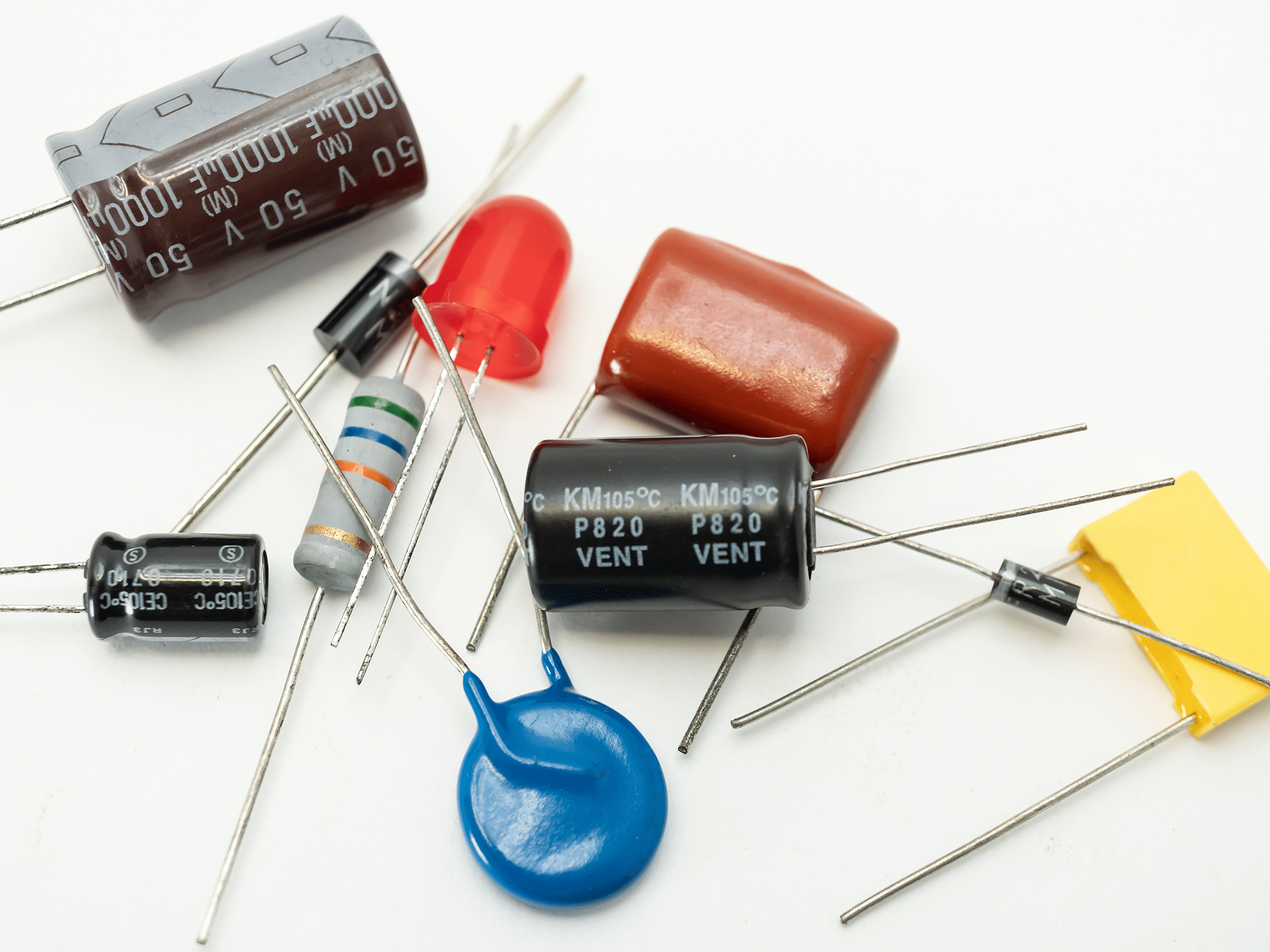
Analogue component offer more than you might think.
Don’t be deceived by the illusion that circuits without digital elements, such as processors, significantly limit our possibilities related to creating multifunctional designs. In fact, transducers, i.e. components that are responsible for converting various physical quantities into voltage or current (and vice versa), are the “senses” of each circuit. Examples of such components include microphones and loudspeakers, but our ingenuity can go well beyond acoustic wave processing, as cheap and simple to implement transducers can also detect pressure, temperature or fluid flow. There are hundreds of transducer types available on the market, which we can use to construct interesting home automation devices or innovative toys.
Starting your journey in the world of electronic engineering from building analogue circuits can be extremely fulfilling, and teaches you both theory and practice. If we limit our experiments to relatively low voltages (preferably 5 V or 12 V), we can attempt to design our own circuits – bearing in mind that education based on making and correcting mistakes is really effective.
Digital and programmable electronic engineering for beginners
Digital electronic engineering is a totally different field, as it requires knowledge of logic systems and programming skills. Obviously, some basic understanding of the physical occurrences in electric circuits remains essential, if only to ensure proper power supply for individual components and provide the required voltage for binary states and transmission lines. However, in order to avoid failures and errors, it is mostly sufficient to read the circuit documentation and follow a few simple design principles that are widely discussed on the Internet and in the literature.
In the field of digital electronic engineering, information is transmitted and processed in a binary (“zero-one”) form. In practice, it means that voltage is present/not present in circuit lines. When a certain threshold is exceeded (depending on the type of components used), voltage is treated as “1”. When voltage is missing, it is “0”.

Implementation of complex projects based on the Arduino platform does not require using numerous components.
Amateur digital electronic engineering projects are most often implemented with the use of ready-made platforms, such as Arduino, ESP32 or Raspberry Pi. These solutions are extremely popular and widely described in a detailed and accessible manner by manufacturers and a large group of enthusiasts. They facilitate implementing even complex projects using as few external components as possible. Most operations are software-based and run by a microprocessor or a microcontroller. Additionally, such modules feature voltage stabilising systems, communication interfaces, Wi-Fi modules and other solutions to make it possible for users to work on a variety of different projects. In fact, it is not an overstatement to say that you can simply unbox Arduino, plug it to a computer USB port and just start working on your first project.
Unfortunately, from the perspective of classic electronics, the digital version of electronic engineering lacks numerous educational advantages. Digital electronic engineering makes it easy for us to get familiar with various components, become somewhat proficient at recognising and connecting them, and also obtain basic knowledge regarding electronic diagrams. On the other hand, the majority of knowledge acquired by a beginner user of Arduino or Raspberry Pi is related to the programming aspect. If this is the goal, the choice is simple. However, if we want to learn about the operation principles of electronic circuitry, gain knowledge which will help us develop our own devices, troubleshoot failures, repair toys or small electric appliances, it will soon become clear that the knowledge of Python or C language commands is of little use. In addition, when implementing projects, we will be forced to follow instructions taken from professional publications or the Internet, which is not very creative.
However, the extensive possibilities offered by the digital platforms cannot be ignored. Even if it appears to be an ambitious goal, every beginner hobbyist should consider mastering the basics of both fields of electronic engineering, i.e. classical and programmable electronic engineering. Combining the possibilities offered by these fields quickly yields surprising and even impressive results. After all, broadening one’s own horizons is what drives every enthusiast.
| Image | Price | Shopping list |
|---|---|---|

|
from PLN 70 | Arduino |

|
approx. PLN 50 | ESP32 |

|
from PLN 100 | Raspberry Pi |
How to encourage a child to engage in electronic engineering projects?
Even though it may not be so obvious at first glance, most children (regardless of gender) are fascinated by electronics. Hence the popularity of all those beeping and blinking toys or sneaking phones from parents or reaching for video game consoles and computers. Plus, let us not forget about such popular items as remote-controlled trains, electric toy cars and drones.
All these products not only contain electronic circuits, but can also be built at home, which gives a child a unique opportunity to learn the basics of technology and mechanical engineering, as well as develop artistic and technical skills (after all, a proper toy car designed by a young engineer must have a flashy bodywork).
Below, we will unveil several paths that will help you take your children deeper into the world of electronic engineering. However, regardless of the route taken, there are two things that are of key importance: patience and intuition. If a child does not want to “work” with us, let us remember that it is up to them to decide what they do in their leisure time. Obviously, it is worth making a few attempts to get your child interested in electronic engineering or programming, or we can take on an attractive project, hoping that s/he will join us sooner or later.
However, make sure to follow the rule every parent knows so well: forcing a child to do things is counterproductive.
Shopping list and expenses
Electronic engineering, like many other hobbies, can cost you a lot – but not necessarily. Below, we will look at some possible spendings, broken down into the cost of tools, electronic components and additional costs involved in setting up a more comprehensive workstation. Keep in mind, however, that investments in one's interests, and in education, are staggered over a certain period of time. It is also the case when it comes to the gradual igniting of our kids’ passions – in such situations there is no point in spending much money in one go. We need to make sure that the number of ideas and amount of new equipment does not overwhelm us before we even spread our wings.
What comes in handy in amateur electronic engineering?
This is a very apt question, as certain basic pieces of equipment always come in handy, regardless of the path we take in the world of electronic engineering.
Surely, we will need a multimeter (preferably a digital one). It should come with at least three features, i.e. a voltmeter, ammeter and ohmmeter. Work comfort is also important, so selecting a cheap tool from an obscure manufacturer is not a good idea. It’s better to pay a bit more, but be sure that the measurement accuracy and the range of functionalities offered by the device is satisfactory. Moreover, an electric meter comes in handy in a variety of situations, even in the context of everyday repairs in your house or garage. For our electronic projects, its measurement range should also include the micro-ampere scale (low-intensity current testing) and capacitance measurement feature (F, mF, µF) to test capacitors.
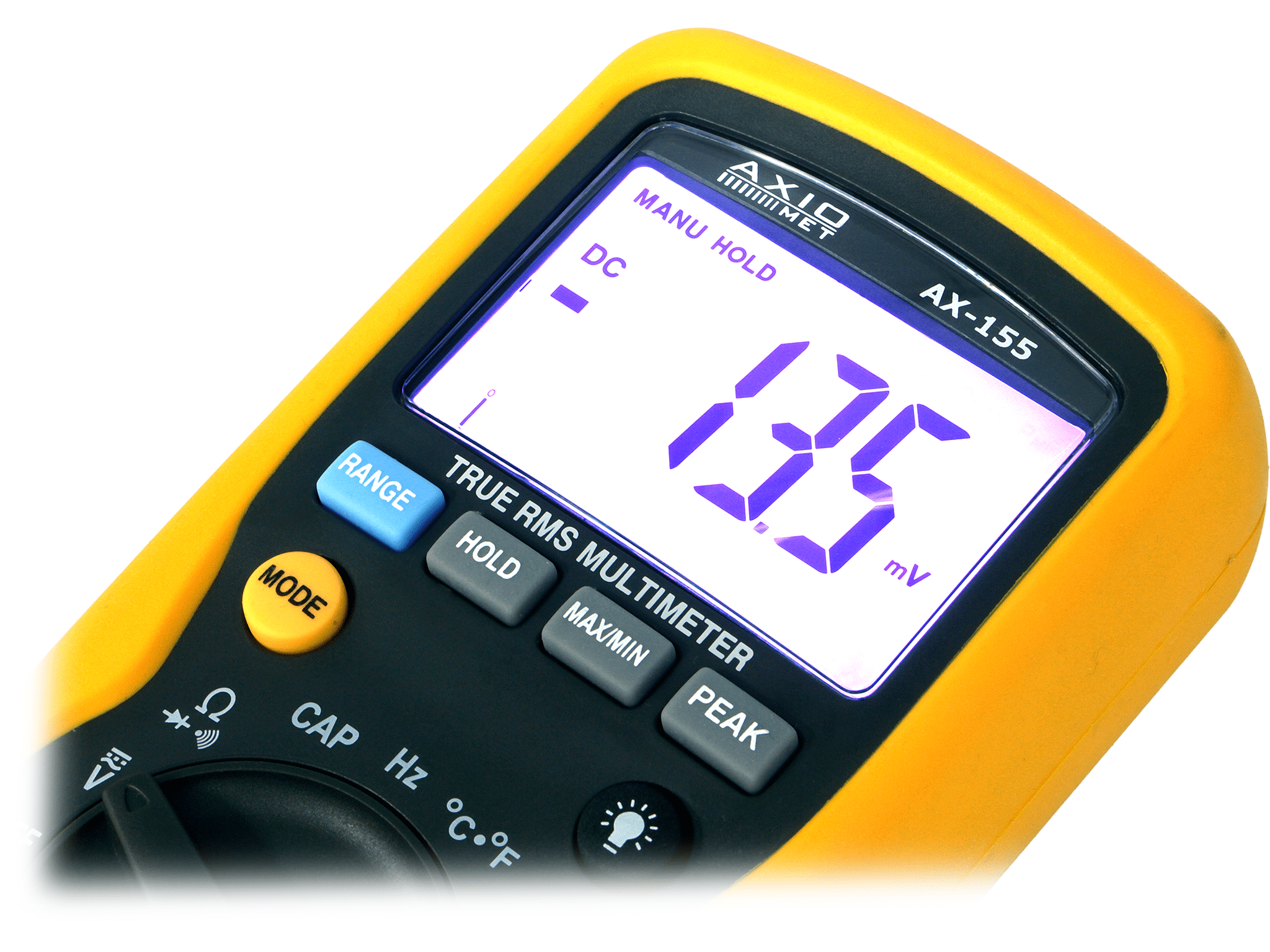 A clear, backlit display is a great advantage of a multimeter.
It is also worth choosing a device with a thermocouple connection (make sure the thermocouple is included in the set) to measure temperature values. The circuit continuity testing feature is very important, too. Luckily, almost all multimeter models offer it. The price of a suitable multimeter does not have to be exorbitant. Splashing out on professional solutions for electronic circuit designers is not really necessary. An amateur electronic engineer will surely make do with meters offered by such recognised brands as Fluke, Extech, Uni-T or Axiomet.
There is also another reason why it is not worth investing in a professional multimeter that will definitely set you back a bit. When working on electronic circuits, the best solution is to have two multimeters. They will come useful in such (numerous) situations as, for example, the necessity to simultaneously monitor two physical properties, e.g. voltage and current in order to be able to calculate the power value. The good news is that the functionality range of the second multimeter can be limited. In fact, you should even go for a miniature model that, if necessary, can be carried in a tool box or placed in a glove compartment.
 Lab power supply modules are almost always quite large.
The other item you should invest in is a lab power supply module. Although we can start experimenting with an ordinary USB charger providing stable 5 V voltage, this solution does not guarantee the required level of safety, durability and flexibility. A power supply module ensuring the right conditions for a hobbyist must be equipped with protections against failure due to overload, overheating and short-circuit. Most importantly, it can supply preset voltage (we strongly recommend modules with an infinitely variable and precise voltage adjustment feature). While working on operational amplifiers, audio circuits and other analogue circuits, a symmetrical power supply module, i.e. three lines, e.g. -12 V, 0 V and 12 V should be used.
A dual-channel power supply module with two pairs of independent outputs makes it possible. However, if we are limited by budget constraints or available space on our workstation tabletop, a small, but well-protected and adjustable power supply module will make do for a while. One more thing must be emphasised before we move on to describe other equipment – the power rating of our power supply, especially in the case of a single-channel unit, does not have to exceed a few tens of watts, as we will probably never use higher voltages than 12 V and currents exceeding 1 A.
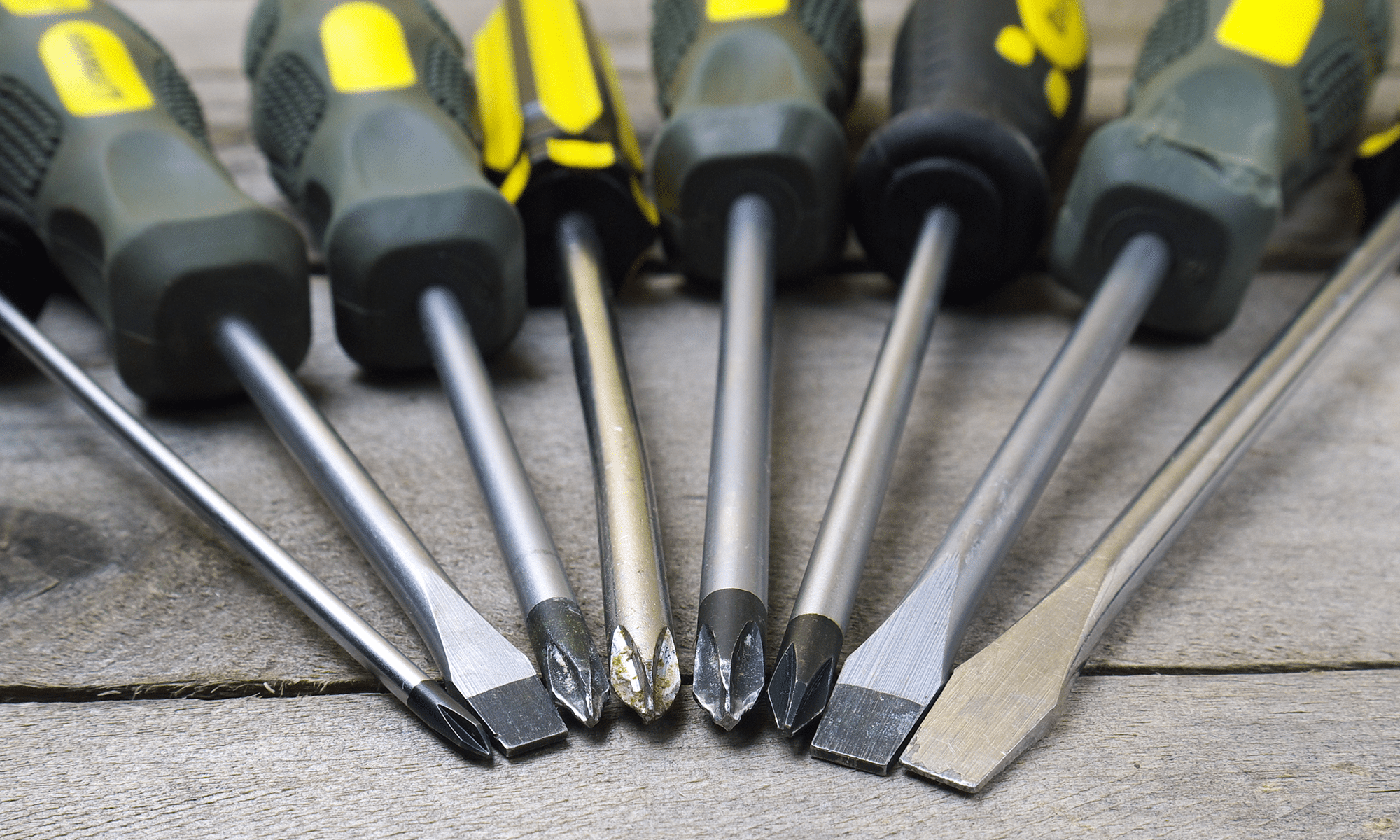
Screwdrivers are tools which always come in handy. A suitable screwdriver set should include (at least) a few Phillips screwdrivers (sizes PH0, PH1 and PH2), and a selection of flat screwdrivers. Why? Because, even though nowadays screws with such heads are not so common, at home, a screwdriver is also used for prying, scraping, breaking and many other activities that no self-respecting manufacturer mentions in the product documentation. If you are going to scrutinise interiors of various electronic devices, you should also have a set of Allen wrenches and Torx screwdrivers.
Now, we should also mention a few accessories that are not absolutely necessary, but are inexpensive and might make work on electronic circuits much easier. Pliers – at least three pairs will come in handy: (1) narrow-jaw pliers, (2) small cutting pliers (side-cutting and possibly end-cutting models) and (3) universal pliers. Tweezers – preferably antistatic and quite rigid. Work lamp – particularly useful for examining PCBs, verifying solder joints or reading component symbols. A magnifying glass may also be useful for the same purposes. Other useful tools include a little knife with replaceable blades and a ruler (a metal one facilitates work with fairly hard materials, e.g. PCB laminates).
 You can tool up your workstation quickly and cost-efficiently with a screwdriver set.
An insulation stripper is also a multi-function and handy tool, in particular when you intend to prepare connection lines for your experiments (you can read more about it in the next part of this text, devoted to soldering). For precision work, which is rather unavoidable in the field of electronic engineering, a slide calliper will definitely come in handy. For projects that go beyond mere circuit building and require e.g. the processing of plastics, a hotmelt glue gun is always a handy tool. It can be used for the temporary immobilisation of components in the process of prototyping, as well as for fixing certain parts (e.g. wires) in a ready-made device.
| Image | Price | Shopping list |
|---|---|---|

|
from PLN 150 | multimeter from a recognised supplier |

|
from PLN 100 | Pocket multimeter |

|
from PLN 300 | Dual-channel power supply module |

|
up to PLN 80 | Flat and Phillips screwdrivers |

|
approx. PLN 70 | Allen wrenches (set) |

|
from PLN 50 | Torx screwdrivers (small) |

|
from PLN 40 | Narrow-jaw pliers |

|
from PLN 15 | Cutting pliers |

|
approx. PLN 30 | Universal pliers |

|
PLN 15 | Tweezers |

|
approx. PLN 20 | Insulation stripper |

|
from PLN 10 | Magnifying glass |

|
from PLN 60 | Slide calliper |

|
from PLN 50 | Glue gun |
Sets for beginner electronic engineers
Electronic equipment shops often offer ready-made sets of electronic components. It is a good solution for those who intend to equip their workstation with basic components, however, this does not mean that all elements in the set will prove indispensable. On the other hand, even a well-composed starting set will surely lack a small component that might be much needed in near future to build a circuit you have just started working on. It seems that waiting for deliveries with new components is inevitable. In this situation, you must be patient and rely on express shipments from reliable distributors. For example, TME delivers goods directly from its own warehouse, which shortens the shipping time to as little as several hours (for most components).
A much better solution is to create an individual list of necessary elements (based on the selected circuits that you are going to build) and purchase all of them in one go. You can also stock up on some components, by ordering more pieces than you need at the moment – in this way, you will not be held up by the failure of a single component and at the same time you will slowly develop your stash for future use. Often, you will have to buy larger batches of components than needed, as the smallest items (such as resistors or capacitors) are sold in bulk packs of 10 or even 100 pieces. Fortunately, they are cheap enough not to strain anyone's budget.
In order to have complete sets of necessary components, you may also buy them alongside other ones, e.g. judging by their value. For example, while buying a 2.2k resistor, add 22, 220, 22k and 220k resistors to your shopping cart. The value of the basic parameter for reactive components is usually defined by the standard factor (e.g. 2.2 or 5.6) multiplied by 10x. By acquiring several orders of magnitude of each component, you will quickly have enough resources available to work freely on new projects. If this is the way to go, you should have at least a few plastic boxes with compartments ready in advance. Zip-lock bags can also be used for this purpose, but sharp component leads will definitely pierce them with time. All boxes should be labelled to avoid all the hassle resulting from constant looking for the right component. Those who value good organisation of work and tidiness should consider buying a label printer, which might revolutionise your entire home (not only your workshop). The next text in this series contains several ideas for initial projects and also components that are necessary to implement them. However, regardless of the path taken, you should focus on specific ideas and the consequent needs, not on equipping your workshop with all types of available equipment, which is often absolutely unnecessary.
You should also make sure you have access to consumables, which you will need in the majority of projects. These include small- and medium-diameter heat-shrink tubes, insulating tape and single-conductor cables.
| Image | Price | Shopping list |
|---|---|---|

|
from PLN 10 | Containers with compartments (a few pieces) |

|
approx. PLN 20 | Heat-shrink tubes (various diameters) |

|
from PLN 10 | Insulating tapes |
Equipment for ardent hobbyists
It is often recommended that amateur electronic engineers should buy an oscilloscope, a microscope, a soldering station and some power tools (most of all a mini-grinder). In this case, however, it is good not to rush things too much. Obviously, such devices are handy, and each electronic engineer’s workstation should be equipped with them. Nevertheless, they can just as well be purchased at a later stage, when we make sure that we want to allocate a larger budget to enjoy our hobby.
If you are driven by ambition or already feel at home in the field of electronic engineering, when it comes to ordering the recommended equipment listed above, it is good to start with an oscilloscope. Although they seem extremely complicated, and their panels are usually full of knobs and buttons described with obscure abbreviations, what they do is actually extremely simple. An oscilloscope is a device that displays a diagram of voltage changes over time. Modern devices come with a range of related functionalities, but in the vast majority of cases, all such improvements serve this one purpose mentioned above.
 An oscilloscope facilitates real-time testing of electronic circuitry operation.
When buying an oscilloscope for an amateur workshop, you should definitely avoid the cheapest models from unrecognised manufacturers or all sorts of “portable” versions (even if they come from a tried-and-tested supplier). The former are affordable, because their manufacturers make savings on calibration, precision and necessary circuit protection, so they may get damaged quite easily. On the other hand, breaking an oscilloscope from a renowned brand is much more difficult than one might think, as it is usually packed with components and features protecting it against the consequences of user errors or carelessness. When it comes to “portable” oscilloscopes, they are designed for long-term, professional use by field technicians. This means they are highly accurate and robust, but their prices are disproportionately high. All in all, for most applications at home, or even electronic circuitry troubleshooting, the basic models of oscilloscopes offered by tried-and-tested manufacturers are absolutely adequate.
This is the end of our introduction to the world of electronic engineering. In the next part of this series, we will provide basic information on soldering, which is one of the most common activities related to electronic engineering, and we will show you how you can start your adventure with electronic engineering projects.
Transfer Multisort Elektronik (TME) is one of the world’s largest global distributors of electronic components, electrotechnical parts, workshop equipment, and industrial automation. The catalog includes over 1,500,000 products from 1,300 leading manufacturers. TME’s modern logistics centers in Łódź and Rzgów (Poland), with a combined area of over 40,000 m², ship nearly 6,000 packages daily to customers in more than 150 countries.
TME also invests in the development of knowledge and skills of young engineers and electronics enthusiasts through the TME Education project, and supports the tech community by organizing the TechMasterEvent series, promoting innovation and experience exchange.