Electrical diagrams - how to read them?
Electrical diagrams - how to read them?Date of publication: 29-03-2022 🕒 5 min read

Why is it difficult to learn electronics?
Many people see electronics as a very complex issue. However, it is important not to forget that we encounter all sorts of difficulties when learning any subject, and every electronics engineer has had to overcome them at some point before creating fully functional circuits. Many reasons make the task difficult for beginner electronics engineers, but let's list a few of them:
- Electrical circuits are made up of components with different functions, the role they play depends on the value of the other components and their location in relation to each other.
- The designer writes down his idea in the form of a diagram. It uses a range of electronic symbols for this purpose. To use electrical diagrams, we need to recognize and understand them.
- Electronics deals with the processing of electricity, which is something that cannot be seen. Current and voltage must be detected and measured. This requires not only the right equipment but also the skills to use it.
- When looking at an assembled electrical circuit, when we want to locate individual electronic components, we often have a problem because they can be similar to each other while performing completely different functions in the overall system. . The progressive miniaturisation exacerbates this problem.
Electrical diagrams and their types.
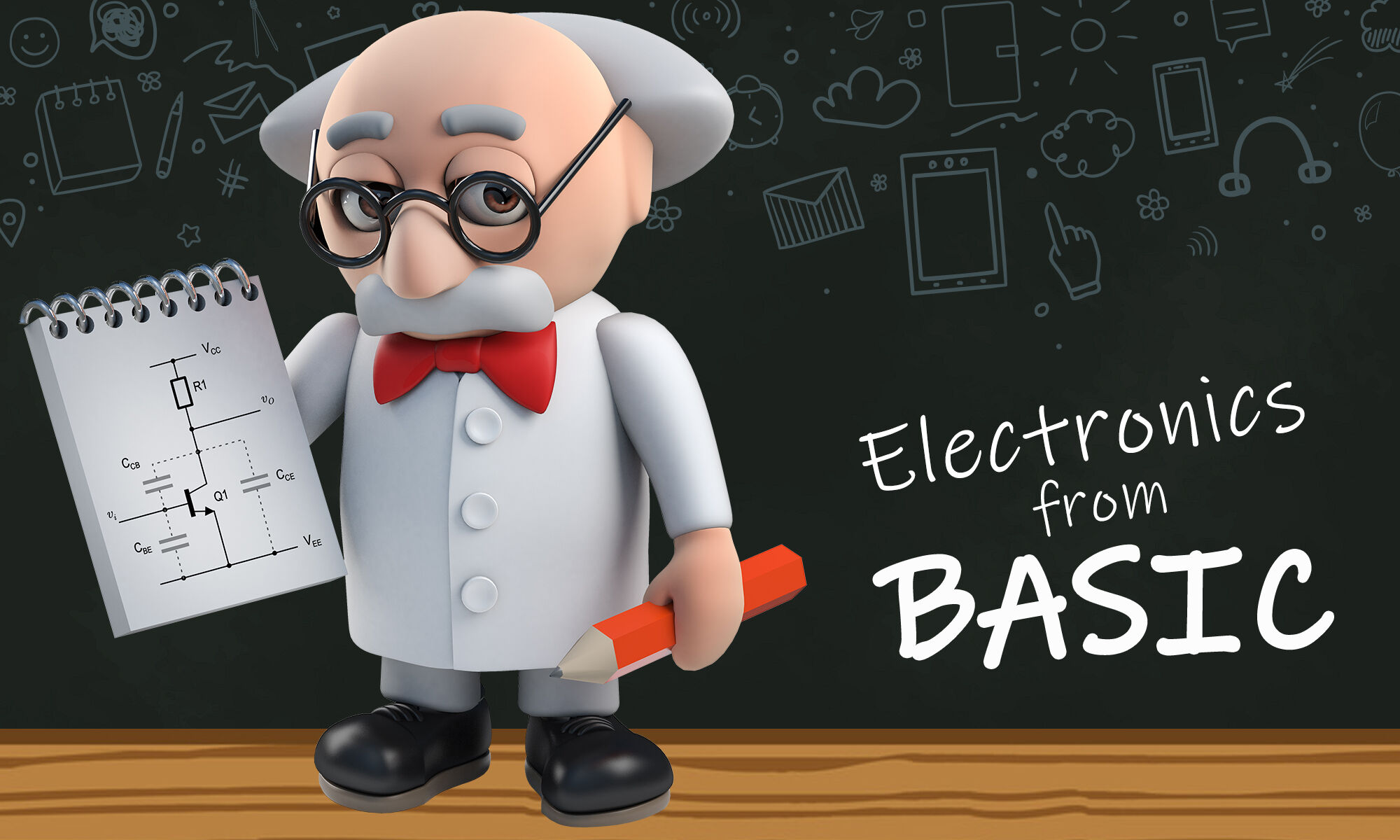
In order to understand what an electrical diagram is, the analogy to geographic maps can be used. An electric current is a stream of electrons in very many cases behaving similarly to water because it is a stream of molecules. A diagram of the electronic circuit resembles a map where electrical connections are marked. Proficient use of a map involves finding characteristic points in the field and positioning the map so that the location of symbols on the map reflects the location of objects in the field. We act identically with electrical diagrams. In the first step, you need to find the characteristic electronic componentsin the circuit, then you need to find them in the device.Sometimes the diagrams are divided into several sheets so that you can move from one sheet to another without any problems. The same signal is named identically in the diagrams of adjacent systems.There are three types of electrical diagrams. Block diagram — functional blocks in the form of black boxes. In this way, the designer writes the modules of the diagram. Schematic diagram — uses symbols to represent components and connections between them. Wiring diagram — is a sketch of a printed circuit board with components mounted on it. It is very useful when assembling the system or searching for specific elements in it.
Why are there three types of electrical diagrams?
The same device can be made in several ways. There are linear and switch-mode power supplies. Its voltage stabilisation circuit can be realised using transistors, a Zener diode or an integrated circuit. Each implementation has advantages and disadvantages. In the block diagram, the designer draws what functions the circuit is supposed to perform and divides the large task into smaller ones that are easier to perform. The designer describes blocks and sometimes signals sent between them. Knowing what kind of diagram you need and the signals at the inputs and outputs, one can design the schematic diagram. Later, the designer assembles the circuit; based on this, a wiring diagram (circuit diagram) is drawn, which is a graphical representation of an electrical circuit. The block diagram is also used to find out how the device works and if it is not functioning properly; by carrying out an analysis, the search can be narrowed down to a specific block.
How to determine the role of an electronic component? Schematic designations
The designer usually does not invent the entire circuit from scratch but uses known configurations. Instead, the designer needs to know the properties of the connected components; thus, one can select the types and values of the components so that they perform specific tasks. The installer or service technician does not have to guess what the function of the circuit is, because the diagram is usually accompanied by a description of the solutions used, and the elements are designated by symbols. Thus, it is enough to identify a group of components with the same description in the diagram. Usually, however, several have to be found, because there may be more than one element of the same type or value in both the circuit and the schematic. Surprisingly, the more elements in a group, the likelihood of misplacement is much lower. Then, following the paths in the circuit and the lines in the diagram, you can identify the remaining components However, when working on the diagram one must remember that the appearance of symbols used in electrical diagrams in Poland is determined according to Polish Standards. The same element may have a slightly different symbol on the diagram made in the USA. A search engine for standards applicable in Poland is available online - you can find out which standards are currently in force. Electrical diagrams can be drawn manually or using a computer. Computer-aided design (CAD – Computer-Aided Design) software allows you to make corrections to existing schematics without having to redraw them. The more powerful programs have many additional options, including the ability to simulate circuit operation, assist in PCB design, or automatically perform an inventory of components.
Simple electrical diagrams for beginners - how to learn to draw them? How to read them?
There are two dominant schools for learning how to read and draw schematics. One theory is that it is better to learn to read diagrams first and then draw them, while the other is that it is better to do both at the same time. Both learning techniques have their advantages. However, it is necessary to start by learning the symbols of basic components. There are many sites on the Internet where these are described in detail. Once we are familiar with both the electronic components, their symbols and their basic functions, we can analyse as many diagrams as possible. You can then proceed to draw your own simple electrical diagrams for beginners. Drawing, reading, and finally creating diagrams, all these skills are quickly mastered.The diagrams include mechanical components such as switches and relays. They are not the heart of the circuit, but they conduct the input and output signals and provide power to the circuits, so they are essential for the whole circuit to work at all. The diagram shows symbols representing active components such as transistors, operational amplifiers, diodes, and switches. Active devices are electronic components that require voltage or current to perform their intended function. Active devices usually require a power supply with a specific voltage, current, and polarity for proper operation. Finally, each electronic circuit also includes passive components, such as resistors, capacitors, coils, and transformers. These components do not depend on the external source of energy or voltage or polarity. In general, they have electrical properties that depend on their physical characteristics, such as the material they are made of, their dimensions and structure. All electronic circuits need the power to operate, so the power source should be indicated in the diagram.Circuits, whose schematics look overwhelming at first glance, consist of many blocks connected in the correct logical order. Each block is a simple circuit. Such a complex circuit has to be divided into smaller parts and analysed step by step. When learning to read electrical diagrams, the most important and difficult step is getting started. Over time, as we gain practice, the task will become easier and easier, and we will be able to engage in more and more ambitious projects.
Are you interested in electronics? Visit Tech Master Event
If you are taking your first steps in the world of electronics and you are creating your first circuits, Tech Master Event is the service you have been looking for. You can post your own projects and look for inspiration in the works of other users on the platform.
Tech Master Event is also a place where you can find many competitions for young electronic engineers from all over the world.

Transfer Multisort Elektronik (TME) is one of the world’s largest global distributors of electronic components, electrotechnical parts, workshop equipment, and industrial automation. The catalog includes over 1,500,000 products from 1,300 leading manufacturers. TME’s modern logistics centers in Łódź and Rzgów (Poland), with a combined area of over 40,000 m², ship nearly 6,000 packages daily to customers in more than 150 countries.
TME also invests in the development of knowledge and skills of young engineers and electronics enthusiasts through the TME Education project, and supports the tech community by organizing the TechMasterEvent series, promoting innovation and experience exchange.