Marking and certification of electronic devices
Marking and certification of electronic devicesDate of publication: 04-07-2025 🕒 12 min read
We have all encountered them – small, monochrome logos and pictograms on labels and rating plates of various equipment. For instance, to many Europeans, the CE mark has grown so common it's virtually self-evident. Yet, it serves a specific purpose, and an important one at that.
It appears self-evident to us that a microwave oven won't interfere with a television, a washing machine will quietly power down upon cycle completion, and a phone charger can be left safely plugged into the outlet. When acquiring electronic apparatus, we might consciously or subconsciously consider, "Surely someone must have verified if this functions." And indeed, someone does verify it. We will discover below who this 'Someone' is and what precisely such entities examine.
Enigmatic Marks
First, let's address the question – what are these aforementioned, enigmatic marks found on electronic equipment?
These are symbols indicating: which standards the specific device adheres to; where it may be distributed; and which organization confirms the product has undergone proper testing. It is worth noting that these designations can relate to various characteristics or specifications of the goods, e.g. materials used in their manufacture, integrated safety measures, their compatibility with electrical grid parameters, etc. As there are numerous such aspects, instead of delving into a compendium of laws and directives, let us approach the matter from a practical standpoint and decode the most common pictograms.
WEEE Directive
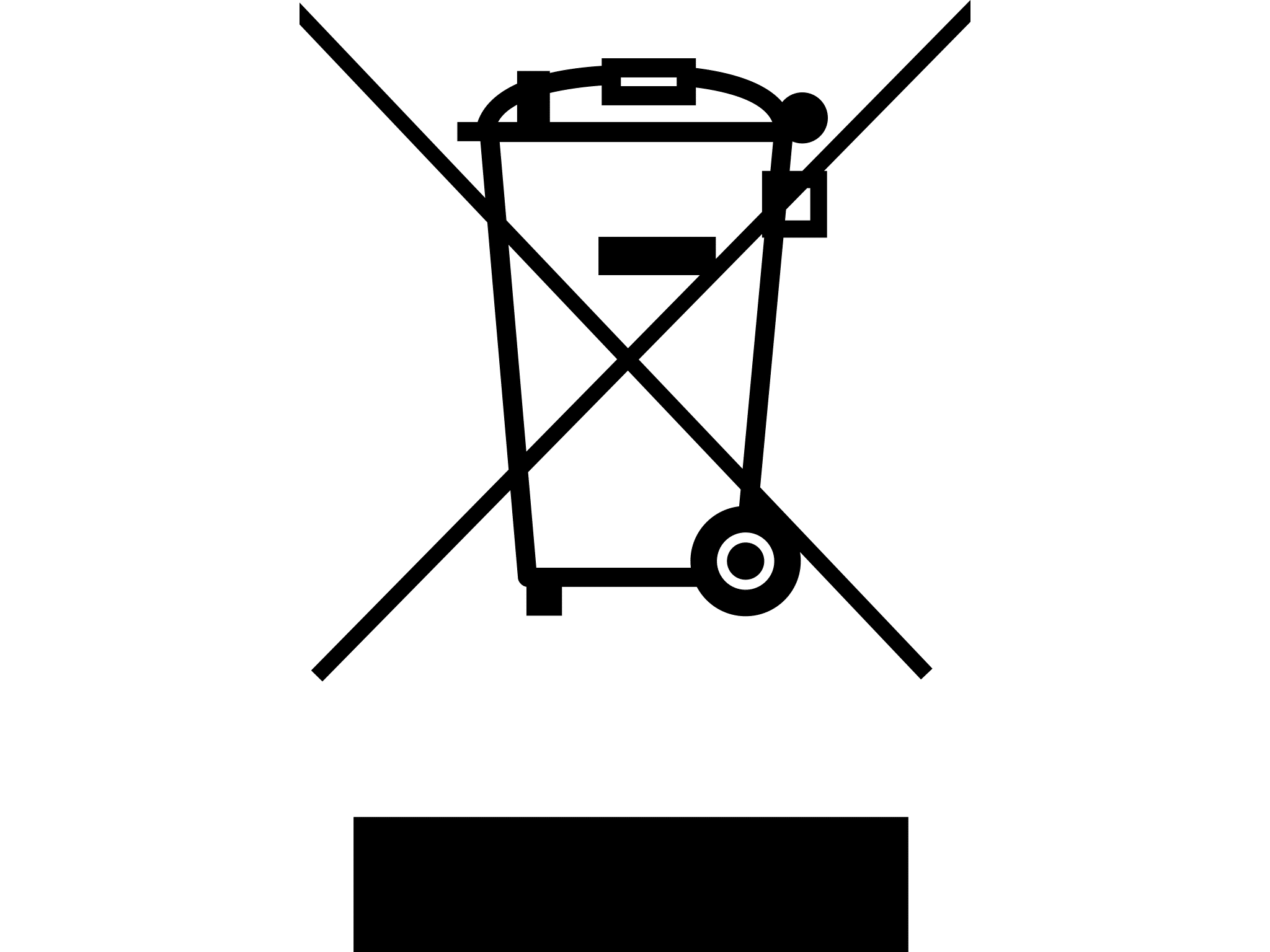
The Waste Electrical and Electronic Equipment Directive, or WEEE for short, is a European regulation aiming to curtail the impact of so-called e-waste on the natural environment. It is widely known that many substances employed in electronic equipment are not readily biodegradable, and sometimes are indeed detrimental to nature. To monitor, and over the longer term regulate, waste collection in European Union member states, items powered by electricity are marked with the depicted symbol, indicating the article ought to be properly disposed of (which for the consumer implies: delivered to a disposal facility or placed into the appropriate receptacle). Other provisions and revisions of the directive specify the requisite ratio of new products entering the market to the weight of de facto used devices as waste. Thanks to this, member countries maintain a degree of (albeit generalized) oversight concerning the issue of electronic waste.
RoHS Directive
The European regulation, Restriction of Hazardous Substances, concentrates on the most deleterious substances found, among others, in electrical engineering devices. While member nations possess varying enforcement methods for this directive's stipulations, its overarching goal is the restricted application of: mercury, cadmium, lead, and a range of chemical compounds acknowledged (based on thoroughly documented research) as hazardous. These include, for instance, certain flame-retardant additives for plastics. For the elements/compounds falling under the directive, their maximum permissible concentration has been stipulated. Every homogeneous component of the product (screw, housing panel, laminate, glazing, speaker membrane, etc.) must comply with these. If the concentration levels are satisfied, the manufacturer may affix the RoHS mark to their product. In the realm of electronics, this frequently entails the employment of lead-free solders.
CE Mark, or conformité européenne

The acronym CE originates from the French expression conformité européenne (European conformity). It is employed to verify compliance with pertinent European standards for goods manufactured and imported into the European Union market (as well as Norway and Iceland). For electronic/electrotechnical equipment, CE is connected to three international directives, contingent on the type of apparatus.
Radio Equipment Directive (RED)
The RED directive applies to equipment utilizing radio waves for telecommunications or radiolocation. Some of the regulatory stipulations here are quite straightforward (e.g. the merchandise must feature a discernible symbol permitting its identification, such as a model number). Technological stipulations, conversely, pertain to the maximum power of emitted radio waves, the precise definition of frequency ranges upon which the apparatus operates, etc.
Low Voltage Directive (LVD)
As its denomination implies, the directive outlines the conditions that manufacturers and importers of low-voltage apparatus must satisfy, where their power supply (not the voltages within the circuits!) falls within the ranges of 50…1000V AC and 75…1500V DC. This, therefore, refers to a phone charger, but not the phone itself. The LVD specification is founded on recommendations formulated by the IEC (more on this entity shortly) – it also mandates informing the consumer about the device's producer, appending instructions to it, etc.
Electromagnetic Compatibility Directive (EMCD)
The directive regarding electromagnetic compatibility, specifically waves emitted by a particular device and its conduct under interference (filtering). Issues related to EMC are detailed further below. It should be emphasized here that CE certification is issued based on the attestation of the manufacturer/importer that appropriate tests have been conducted (the supplier is obligated to retain their documentation for a period of 10 years). Regrettably, such an "honorary" system occasionally gives rise to abuses.
Electromagnetic Compatibility, or EMC
Requirements pertaining to electromagnetic compatibility vary depending on the product's function: if it is a device to be connected to the grid, but its objective is not to emit radio waves, the regulations are fairly straightforward and limited to matters such as interference introduced by the device into the electrical installation and the device's behavior under disturbances. It's essential to recall that even a relatively simple circuit generates electromagnetic radiation to a greater or lesser extent, sometimes at a minimal level (current flowing in PCB traces), and occasionally noticeably (e.g. an improperly shielded switching converter or a microwave oven lacking grounding can disrupt a WiFi signal). Significantly more stringent are the tests concerning devices that inherently emit electromagnetic waves (mobile phone, walkie-talkie, inductive charger).
Electromagnetic compatibility is critically important, as it directly translates into both conflict-free, comfortable operation of devices and the safety of users themselves. It is precisely due to EMC regulations that we are assured a refrigerator or washing machine will not electrocute us, and a laptop and phone will not mutually interfere with their operation.
Establishing Standards
Until now, our focus has primarily been on European regulations, hence those stipulated by the European Union. However, it is evidently not the sole entity involved in regulating global markets. Norms and standards are also established by numerous local organizations and agencies. Among the most frequently encountered are the institutions detailed below:
IEC or International Electrotechnical Commission

The IEC constitutes an international organization based in Geneva. It conducts research and articulates standards in the fields of electrotechnics, electronics, and associated domains. Numerous solutions advanced by the Commission are developed in collaboration with ISO and ITU, which are allied institutions in the realms of standardization and telecommunications. Examples encompass international formats for network plugs or commonly utilized pictograms for designating buttons on electrical devices. Electronics engineers and electricians are thoroughly familiar with the IEC, partly due to safety categories for measuring instruments. It was this Commission that determined what parameters and protection multimeters intended for evaluating standard network installations, power lines, etc., must deliver.
FCC
The FCC, or Federal Communications Commission, is an independent American agency concerned with market regulations for terrestrial, satellite, and cable transmissions, as well as mobile telephony and broadband internet access. The FCC mark on an item holds similar significance to the CE symbol, yet it pertains to standards enforced within the American market (USA).
UKCA

The UKCA mark was brought into use relatively recently, toward the close of 2020. The necessity for its establishment was linked to the United Kingdom's departure from the EU. As one might infer, it constitutes another CE equivalent, albeit mandated by British legislation (though until the close of 2024, it also allows products certified for the EU market to be traded).
China Compulsory Certificate, CCC
Products imported and manufactured for the Chinese market are required to possess CCC certification. It is issued based on examinations conducted in independent laboratories accredited by the People's Republic of China, which attests to the superior quality of the goods and their adherence to stringent GB (i.e., Guobiao) standards. Such certification is obligatory for computers, home appliances, power tools, toys, and automobiles. In other words: nearly all electromechanical and electronic devices.
Regulatory Compliance Mark (Australia and New Zealand)
The most stylized of the presented symbols is the 'bird' (referred to as the RCM mark), mandated by the legislation of Australia and New Zealand. Such a mark verifies compliance with regulations concerning both electrical and transmission devices (counterparts to European LVD, RED, and EMCD). Analogous to the logos detailed previously, here too, it is requisite that this pictogram be resilient and positioned in a conspicuous location.
Testing Institutions
Many of the symbols affixed to devices do not indicate a standard, but rather specify which institution has examined the product for its adherence to particular (often: all pertinent) standards. Manufacturers of equipment, machinery, and other technological goods commission comprehensive examinations from companies specializing in such assessments – thereby circumventing the expenses of operating their own laboratory, while precise information regarding product quality becomes publicly accessible. Presented below are several marks referring to testing entities. It is noteworthy that some of them (e.g. UL) not only apply existing standards but also formulate their own regulations, often building upon existing solutions – or refer to standards in a version reformulated by another organization. It may thus occur that ETL confirms product compliance with the UL standard, which is predicated on regulations established by the IEC.
UL

UL is still recognized today as Underwriters Laboratories, despite this no longer being the company's official designation. Its main office is located in Illinois, USA. The company's operations encompass both the articulation of norms and standards and the execution of comprehensive tests for devices slated for introduction to the American market. UL certification can be performed at a client's request, considering regulations pertinent to other regions. Letters positioned alongside the UL logo indicate which standards were considered during evaluations (e.g. C for Canada, EU for the European Union).
Recognized Component
The "Recognized Component" insignia also denotes the successful completion of UL tests; however, it pertains not to the entire device, but solely to its constituents (e.g. an integrated converter, communication module). This presents a considerable convenience and economy for electronics manufacturers (e.g. consumer electronics), as employing a component verified for compliance simplifies the final product's testing.
ETL
ETL, or Electrical Testing Laboratories, is another global entity dedicated to the examination of electrical/electronic apparatus. Similar to other firms detailed herein, it primarily functions as a service provider, conducting tests commissioned by manufacturers, chiefly concerning the legal stipulations of diverse markets. Currently, ETL is part of the British Intertek group (whose origins date back to the 19th century) and operates laboratories in the USA, Europe, and Asia (Hong Kong).
CSA Group
Alongside UL in the American market, one may also encounter the CSA Group designation, which stands for Canadian Standards Association, an association operating on principles analogous to UL. CSA holds accreditation from the Standards Council of Canada, an agency advocating standardization in Canada. It operates across numerous domains, which also include energy, electrical engineering, electronics, and communication.
TÜV

The TÜV designation is widespread in Europe, as it pertains to one of Germany's largest testing organizations, Technischer Überwachungsverein (i.e., Technical Inspection Association). It is, in fact, a consortium of several autonomous companies, including TÜV Nord, TÜV SÜD (meaning north/south), TÜV Rheinland, and several minor ones (Austria, Thuringia, Saarland). TÜV conducts examinations in the domains of electrotechnics, chemistry, and medicine alike. It also operates within the automotive sector. Although each TÜV remains a privately-held company, their operations adhere to rigorous frameworks defined by German legislation, and a minimum of 25% of the enterprise must remain under the ownership of the overarching organization, Technischer Überwachungs-Verein e. V.
Geprüfte Sicherheit
Geprüfte Sicherheit translates from German as 'tested safety'. It may pertain to conformity with German stipulations (i.e., local ones), but it is also frequently associated with CE affirmation (refer to: subheading 'CE Mark...'). The distinction here lies in CE certification being issued based on a supplier's declaration (who could hypothetically make a misleading statement), whereas the GS mark validates compliance having been examined by a German-accredited institution.
Transfer Multisort Elektronik (TME) is one of the world’s largest global distributors of electronic components, electrotechnical parts, workshop equipment, and industrial automation. The catalog includes over 1,500,000 products from 1,300 leading manufacturers. TME’s modern logistics centers in Łódź and Rzgów (Poland), with a combined area of over 40,000 m², ship nearly 6,000 packages daily to customers in more than 150 countries.
TME also invests in the development of knowledge and skills of young engineers and electronics enthusiasts through the TME Education project, and supports the tech community by organizing the TechMasterEvent series, promoting innovation and experience exchange.